Cutting no-shows: what reminders and deposits actually do
Reminders win back the forgetful; deposits win back the uncommitted. Where one stops and the other has to start — and the order to roll them out.
A no-show is the most expensive kind of empty chair, because you planned for it and staffed for it and then earned nothing from it. Unlike a slow day, you cannot see it coming, and you cannot get the hour back. The good news is that no-shows are one of the most fixable problems in an appointment business — not with nagging, but with two mechanisms that do the work for you: reminders and deposits. Here is what each one actually does, and where one stops and the other has to start.
Why people no-show
It is rarely malice. Cluster the reasons and you get three: they forgot; they booked something that never felt real because it cost them nothing; or life got in the way and there was no easy way to cancel. Each cause has a different fix, which is exactly why “just send a reminder” only gets you part of the way.
Reminders: the first two-thirds
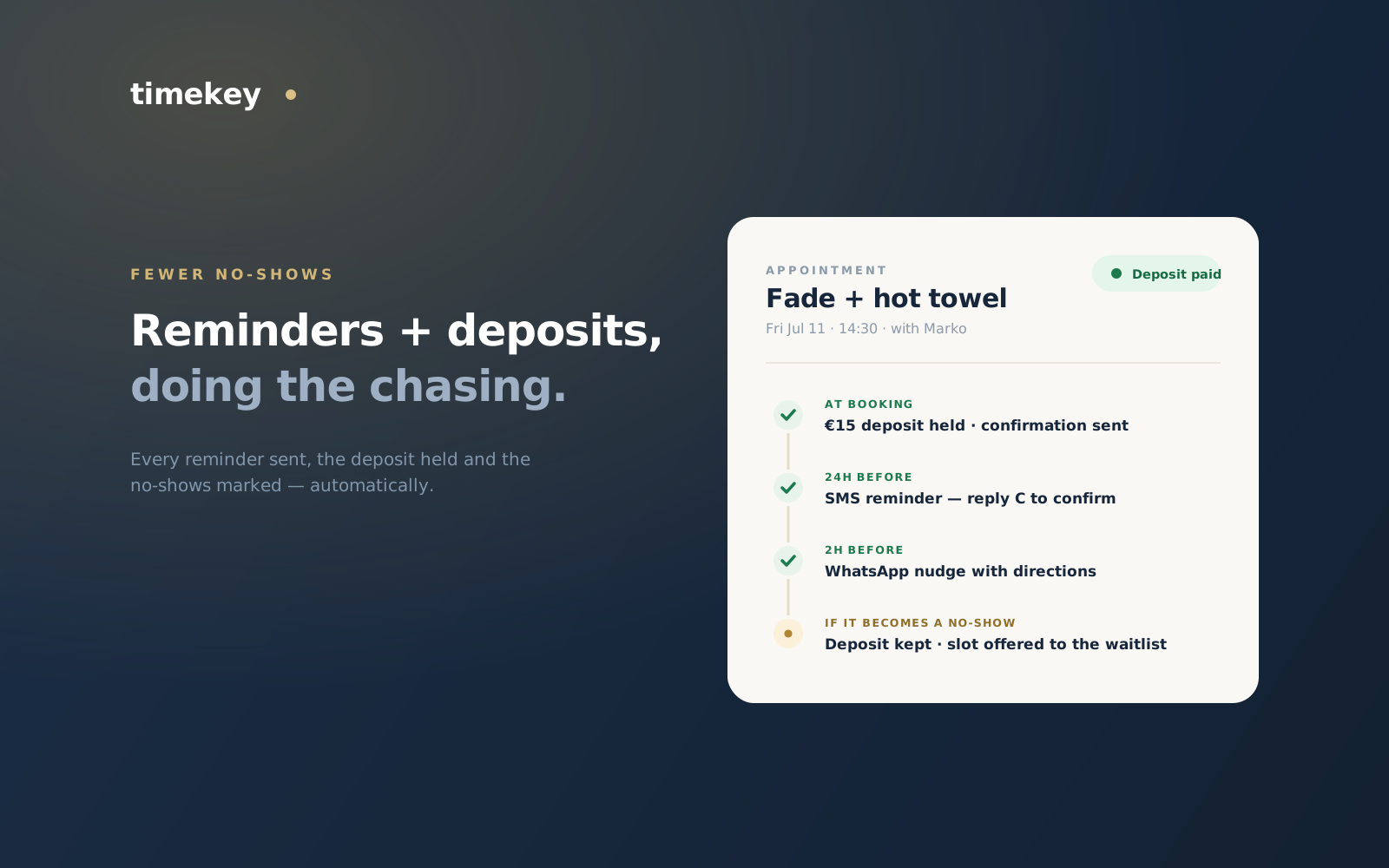
The forgetters are the biggest group and the easiest to win back. A short sequence — a confirmation when the appointment is booked, a reminder the day before, and a nudge a couple of hours ahead — turns most of them into arrivals. A few details decide how well it works:
- Channel. Meet people where they read: SMS and WhatsApp get opened in minutes, email is fine as a backup and a paper trail. Offer the channels your clients actually use.
- Timing. A 24-hour reminder gives them time to rearrange; a 2-hour one catches the day-of drift. Both, not one.
- A way to reply. Let the reminder confirm or cancel with a tap. A client who cancels the night before is not a no-show — they are a freed slot you can still fill.
Get this right and you typically remove the majority of no-shows before you have asked anyone for a cent. But reminders cannot fix the appointment that never felt real — and that is the remaining third.
Deposits: the rest
A booking that costs nothing is easy to abandon. A small deposit — a fixed amount or a percentage of the service, taken at booking and credited to the final bill — makes the appointment matter, without penalising the clients who were always going to show. The art is in applying it with a light touch:
| Service type | Sensible policy |
|---|---|
| Quick, low-cost, regulars | No deposit — instant booking keeps it frictionless |
| Long or high-value services | Fixed or percentage deposit to confirm |
| New clients, peak slots | Deposit on first booking, then relax it for returning clients |
Turn the cancellation into a booking
Reminders and deposits also change when people cancel — earlier — which only helps if you can act on it. A waitlist closes the loop: when a slot frees up, it is offered to the next client waiting for that time, and a gap that would have stayed empty gets filled without a single phone call.
Stop tracking no-shows by hand
The last piece is not about prevention — it is about not spending your evening on admin. Good software marks a no-show automatically, keeps it on the client’s history, and lets you see who does it repeatedly. Over time that history is its own quiet policy: the regular with a spotless record gets instant booking and no deposit; the client with three no-shows books with a deposit or not at all.
The order to roll it out
- Turn on confirmations and a two-step reminder sequence first — it is free to send and removes the largest share of no-shows.
- Add deposits to your longest, most expensive services next, with a fair refund window.
- Switch on the waitlist so early cancellations become same-day bookings.
- Let no-show tracking run automatically and let the client history set your deposit rules for you.
None of this needs a bigger front desk — it needs a calendar that does the chasing. That is the part TimeKey automates for appointment businesses; if you want to see it in one place, here is how it fits together.